If you’ve ever attended a motorsport event — or followed one on television — you’ve likely seen colored flags waving along the track. But did you know that each flag conveys a specific message to the drivers? For marshals, the eyes and ears of the track, these flags are the primary means of communicating quickly and clearly. In this blog, I will take you into the world of the flags that we marshals use.
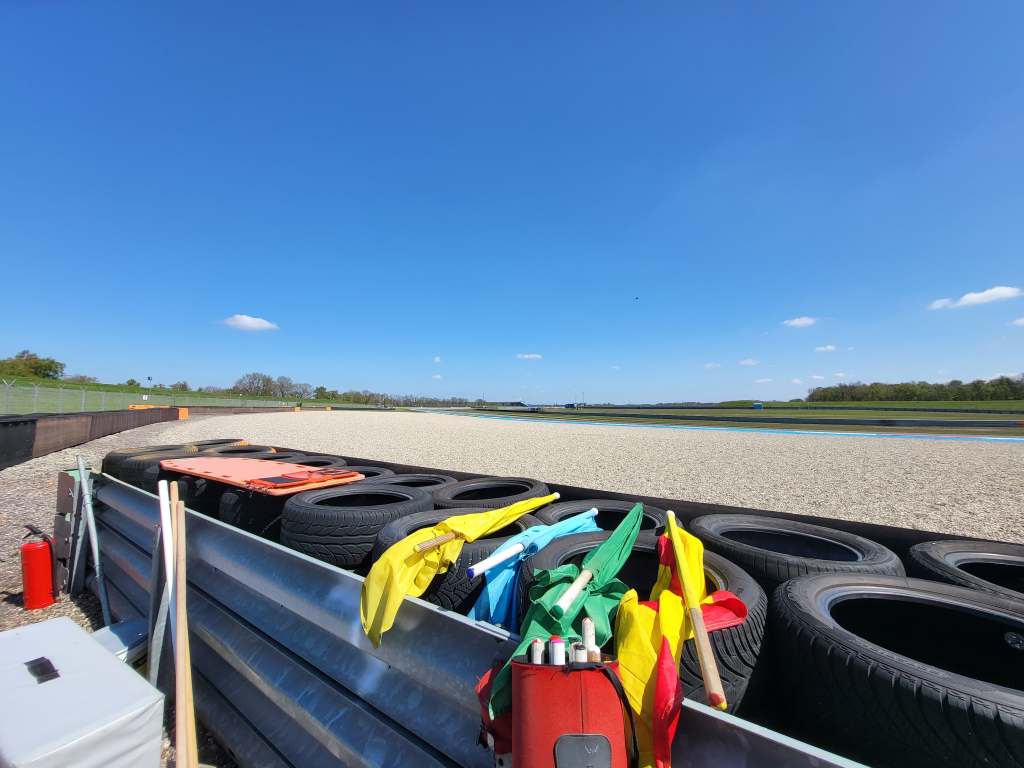
🟡 Yellow Flag: Danger!
The yellow flag is probably the most well-known. If you see one yellow flag waving, there is danger on the track after the flag. Drivers must reduce their speed, and overtaking is not allowed.
Two yellow flags indicate serious danger: there may be a car blocking the track, or marshals may be on the field. Maximum vigilance is required.
🟢 Green Flag: All Safe Again
As soon as the danger has passed, we wave a green flag. This means: clear course, racing may resume. You often see this flag shortly after a yellow zone.
🔴 Red flag: Race suspended
When a red flag is raised, everything comes to a halt. This only happens in serious incidents or when conditions are too dangerous to continue racing — think heavy rain or a serious accident. Drivers must significantly reduce their speed and proceed to the pit lane or another safe zone.
⚫️ Black Flag: Disqualified
This flag is rarely waved, but when you see it with a license plate, you know: that car must come in immediately. The reason? Behavior that is too dangerous or unsportsmanlike to ignore.
⚪️ White flag: Slow participant on the track
For example, a car with a technical problem or a medical car. The white flag warns drivers that there is a much slower vehicle on the track.
🔵 Blue flag: Faster car approaching
Especially relevant in races with different classes or when overtaking backmarkers. As a marshal, you indicate that the driver must make way for a faster participant who is on a lap.
🟠 Yellow with Red Stripes: Slippery Surface
This flag warns of reduced grip — think of oil, gravel, or little parts of debris on the asphalt. Racers need to be extra alert here.
🏁 Black and white checkered flag: Finish!
The flag that everyone hopes for: the end of the race! This is waved at the finish line to indicate that the race, qualification, or training is over.
🎌 And what do marshals do exactly?
Marshals monitor safety on and around the track while flagging. We assist in accidents, report what we see, and ensure that drivers can race as quickly and safely as possible. The flags are our means of communication, but our eyes, ears, and teamwork make the difference.
Have you ever attended a race and seen flags yourself? Or do you have questions about what it’s like to be a marshal? Let me know in the comments!
 Trackmarshal Ruben